Bob Fosse
American choreographer, dancer, actor, filmmaker, and stage director.

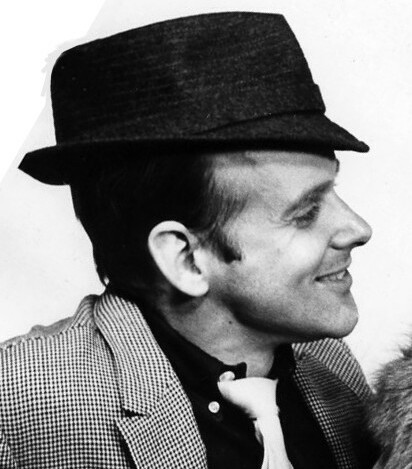
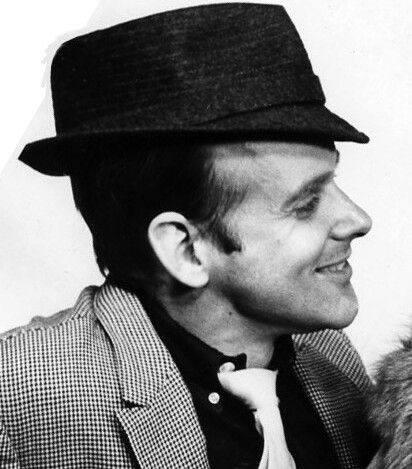
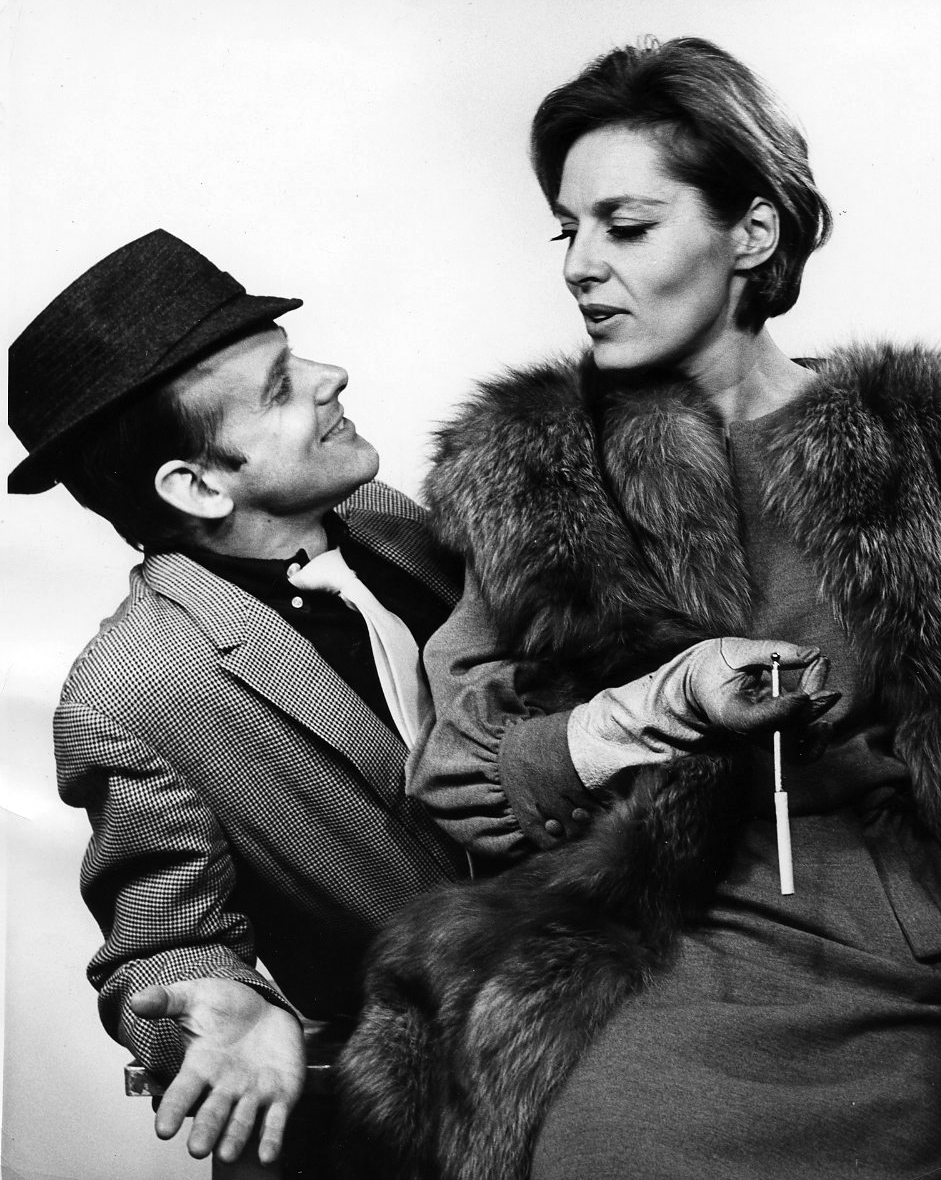
Alix Jeffry · Public domain
Robert Louis Fosse (June 23, 1927 – September 23, 1987) was an American choreographer, dancer, actor, filmmaker, and stage director. He is known for his work on stage and screen, and was arguably the most influential figure in the field of jazz dance in the twentieth century. He received numerous accolades including an Academy Award, a BAFTA Award, three Primetime Emmy Awards, nine Tony Awards, and the Palme d'Or.
- born
- June 23, 1927, Uptown, Chicago, Illinois
Verified Timeline
Lore & Background
Bob Fosse was born in Uptown, Chicago, Illinois, on June 23, 1927, to Norwegian-American father Cyril Kingsley Fosse and Irish-American mother Sarah Alice "Sadie" Fosse. He was the fifth of six children and named after the Scottish novelist Robert Louis Stevenson. He began formal dance lessons at age eight at the Chicago Academy of Theatre Arts under Marguerite Comerford. At 13, he performed professionally with Charles Grass as "The Riff Brothers," touring vaudeville and movie houses in Chicago, as well as USO theaters and Eagles Clubs, including shows at burlesque clubs. Fosse himself said, "I was sixteen years old, and I played the whole burlesque wheel." In 1943 at age 15, he choreographed his first dance number and earned his first full credit as a choreographer in a film, *Hold Evry'thing! A Streamlined Extravaganza in Two Parts*. After graduating from Amundsen High School in 1945, he was recruited into the U.S. Navy toward the end of World War II at Naval Station Great Lakes. He petitioned his manager Frederick Weaver to advocate for his placement in the Special Services Entertainment Division, and was soon placed in the variety show *Tough Situation*, which toured military and naval bases in the Pacific Ocean. After his discharge, he moved to New York City in 1947, studying acting at the American Theatre Wing, where he met his first wife and dance partner, Mary Ann Niles. His first stage role was in *Call Me Mister* (1947), along with Niles. He was signed to an MGM contract in 1953, and his early screen appearances as a dancer included *Give a Girl a Break*, *The Affairs of Dobie Gillis*, and *Kiss Me Kate*, all released in 1953. In *Kiss Me Kate*, he played Hortensio within *The Taming of the Shrew* dance sequences. He transitioned into directing and choreographing musical works, winning Tony Awards for choreographing *The Pajama Game* (1954), *Damn Yankees* (1955), *Redhead* (1959), *Little Me* (1963), *Sweet Charity* (1966), *Pippin* (1972), *Dancin'* (1978), and *Big Deal* (1986), and for directing *Pippin*. He married Gwen Verdon in 1960, his third wife, with whom he collaborated on several theater and film projects. His directorial debut was the musical *Sweet Charity* (1969). He won the Academy Award for Best Director for *Cabaret* (1972) and directed the concert film *Liza with a Z* (1972), which earned him the Primetime Emmy Award for Outstanding Directing for a Variety Special. His final film is *Star 80* (1983).
Reader's Guide
Bob Fosse forged an uncompromising modern style, characterized by finger-snapping, tilted bowler hats, fishnet stockings, splayed gloved fingers, turned-in knees and toes, shoulder rolls, and jazz hands. His career began as an actor in the musical productions *Call Me Mister* (1947), *Billion Dollar Baby* (1951), and *Pal Joey* (1952). He worked on *Bells Are Ringing* (1956), *New Girl in Town* (1958), *How to Succeed in Business Without Really Trying* (1961), and *Chicago* (1975). In film, he played Hortensio in the MGM musical *Kiss Me Kate* (1953). He was Oscar-nominated for directing the dramas *Lenny* (1974) and *All That Jazz* (1979), the latter of which won the Palme d'Or at the Cannes Film Festival. *All That Jazz* won four Academy Awards. Fosse told an interviewer, "Jerry [Jerome Robbins] started me doing choreography. He gave me my first job as a choreographer [*Pajama Game*] and I'm grateful for that." During *Damn Yankees* (1955) he first met rising star Gwen Verdon, whom he married in 1960. For her work in *Damn Yankees* in 1956 Verdon won her first Tony Award for Best Actress in a Musical. In 1957 Fosse choreographed *New Girl in Town*, and Verdon won her second Tony Award for Best Actress in a Musical in 1958. In 1959 Fosse directed and choreographed the stage musical *Redhead*, winning the Tony Award for Best Choreography, while Verdon won her third Tony Award for Best Actress in a Musical. *Redhead* also won the Tony Award for Best Musical. In 1961 Fosse choreographed the satirical Broadway musical *How to Succeed in Business Without Really Trying*. In 1963 Fosse was nominated for two Tony Awards, Best Choreography and Best Direction of a Musical for *Little Me*, winning the former. He choreographed and directed Verdon in *Sweet Charity* in 1966. In 1972 Fosse directed *Cabaret*, which won eight Academy Awards, including Best Director. Liza Minnelli and Joel Grey both won Oscars for their roles. In 1973 Fosse's work on *Pippin* won him the Tony Award for Best Direction of a Musical. He was director and choreographer of *Chicago* in 1975, which starred Verdon. In 1974 Fosse directed *Lenny*, a biographical film about Lenny Bruce, portrayed by Dustin Hoffman. Fosse performed a number in Stanley Donen's 1974 film version of *The Little Prince*. In 1977 Fosse had a small role in the romantic comedy *Thieves*. In 1979 Fosse co-wrote and directed a semi-autobiographical film, *All That Jazz* (1979), starring Roy Scheider. Ann Reinking appears in the film as the protagonist's lover, protégée, and domestic partner. Vincent Canby of *The New York Times* described the film as "Mr. Fosse's answer to 8½ in which Federico Fellini wittily examined his own life at a point when he feared his creativity was at an end." Writing for *The New Yorker* in 1974, Pauline Kael found Fosse "a true prodigy."
Did You Know?
- Fosse was named after the Scottish novelist Robert Louis Stevenson.
- He choreographed his first dance number at age 15 for the film *Hold Evry'thing! A Streamlined Extravaganza in Two Parts*.
- Fosse performed professionally at age 13 with Charles Grass as 'The Riff Brothers,' touring vaudeville and burlesque clubs.
- He won the Academy Award for Best Director for *Cabaret* (1972), which also won eight Oscars.
- Fosse's semi-autobiographical film *All That Jazz* (1979) won the Palme d'Or at the Cannes Film Festival.
Career & Achievements
Robert Louis Fosse's professional journey spanned an extraordinary range of creative roles, from actor to choreographer to stage director to filmmaker. His stage career launched in 1947 with Call Me Mister, followed by appearances in Billion Dollar Baby and Pal Joey in the early 1950s. What set him apart was his rapid evolution into the choreography and direction of major musicals. Over three decades, he earned Tony Awards for choreographing eight separate productions—The Pajama Game, Damn Yankees, Redhead, Little Me, Sweet Charity, Pippin, Dancin', and Big Deal—plus a directing Tony for Pippin. His Broadway footprint also included Bells Are Ringing, New Girl in Town, How to Succeed in Business Without Really Trying, and Chicago. Beyond the stage, his accolades stretched across every major American and international award body: an Academy Award, a BAFTA, three Primetime Emmys, nine Tonys, and the Palme d'Or. Critics and historians alike have called him arguably the single most influential force shaping jazz dance throughout the twentieth century.
Signature Style & Artistic Identity
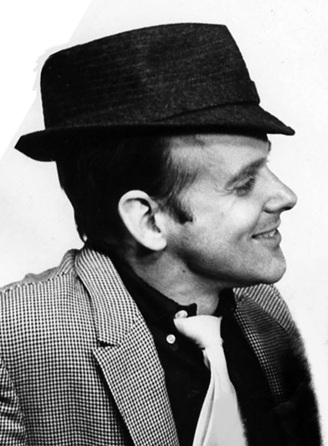
Fosse's choreographic vocabulary became so recognizable that it practically became cultural shorthand. His signature look—tilted bowler hats, fishnet stockings, splayed gloved fingers, turned-in knees and toes, rolling shoulders, finger-snapping, and the iconic jazz hands—emerged from an uncompromising modern sensibility that rejected the polished symmetry of earlier musical theater. The roots of that sensibility ran deep into his Chicago youth. At thirteen, he and partner Charles Grass toured as 'The Riff Brothers,' performing in vaudeville halls, movie houses, USO theaters, and Eagles Clubs, but also in burlesque venues like the Silver Cloud and Cave of Winds. Fosse later recalled, 'I was sixteen years old, and I played the whole burlesque wheel.' That exposure to provocative, body-driven performance clearly fed his aesthetic. By fifteen, he had already choreographed his first credited number in Hold Evry'thing! (1943), a fan-dance sequence for showgirls in strapless dresses drawn directly on those burlesque-house memories. The result was a style that felt simultaneously raw, sexual, and meticulously constructed.
Film Career & Major Works
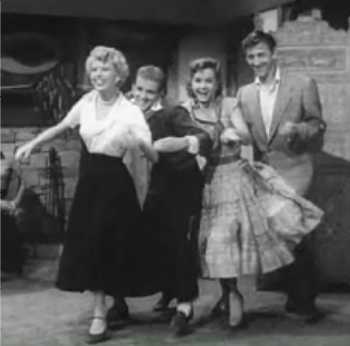
Fosse's foray into cinema proved equally transformative. His early screen work as a dancer included Give a Girl a Break, The Affairs of Dobie Gillis, and the MGM musical Kiss Me Kate (1953), in which he played Hortensio within The Taming of the Shrew sequences alongside Howard Keel, Kathryn Grayson, and Ann Miller. His choreography of a short dance number in that film, particularly his partnering with Carol Haney, caught the eye of Broadway producers. His directorial debut came with the 1969 film version of Sweet Charity, but it was Cabaret (1972) that cemented his reputation: he won the Academy Award for Best Director for that musical drama. He followed it with the concert film Liza with a Z (1972), earning a Primetime Emmy for Outstanding Directing for a Variety Special. Oscar nominations for directing Lenny (1974) and All That Jazz (1979) bookended a period of sustained critical acclaim; All That Jazz also claimed the Palme d'Or at Cannes. His final film, Star 80 (1983), closed a screen career that spanned dancer, choreographer, and director.
Formative Years & Personal Life
Robert Louis Fosse was born on June 23, 1927, in Uptown, Chicago, the fifth of six children to Cyril Kingsley Fosse, a Norwegian-American traveling salesman for Hershey, and Sarah Alice 'Sadie' Stanton Fosse, of Irish-American descent. The family named him after the Scottish novelist Robert Louis Stevenson. His parents enrolled him in formal dance lessons at age eight at the Chicago Academy of Theatre Arts, where Marguerite Comerford became his teacher. By thirteen, he was performing alongside Charles Grass as 'The Riff Brothers,' touring vaudeville halls, movie houses, USO theaters, and Eagles Clubs in Chicago. After graduating from Amundsen High School in 1945, he was recruited into the U.S. Navy at Naval Station Great Lakes. After his own failed attempts to reach the Special Services Entertainment Division, he petitioned his manager Frederick Weaver to advocate with his superiors, and Fosse ended up in the variety show Tough Situation, touring Pacific military and naval bases. He moved to New York in 1947, studying at the American Theatre Wing, where he met his first wife and dance partner, Mary Ann Niles. His third and most celebrated collaboration was with actor-dancer Gwen Verdon, whom he met during Damn Yankees and married in 1960.
Gallery
Frequently Asked Questions
Who is Bob Fosse?
Bob Fosse (1927–1987) was an American choreographer, dancer, actor, filmmaker, and stage director born in Hyde Park, Chicago. He is widely regarded as the most influential figure in twentieth-century jazz dance and left a lasting mark on both musical theater and film.
What made Bob Fosse's choreography so distinctive?
His signature style featured a tilted head, rolled shoulders, bent knees, and sharp wrist snaps, often paired with a fedora or bowler hat. These angular, hip-driven movements gave his numbers a smoky, cabaret-like energy that set them apart from the broad, symmetrical steps common in Broadway at the time.
Which shows and films are Bob Fosse most famous for?
He choreographed and directed major stage productions including Sweet Charity, Dancin', Chicago, and Cabaret, and he directed the 1979 film All That Jazz, which was largely autobiographical. His work on Chicago and Cabaret in particular became defining classics of the musical-theater canon.
How did Bob Fosse's life end?
Fosse died of lung cancer on September 23, 1987, at the age of 60. His final years were marked by a battle with the disease, and his passing was widely mourned by the performing-arts community.
Why is Bob Fosse still considered important to dance and theater?
He essentially redefined how choreography could serve storytelling in musicals, weaving character and narrative directly into the movement rather than treating dance as mere interlude. Generations of choreographers, dancers, and directors still cite his angular vocabulary and theatrical sensibility as foundational to modern jazz and Broadway staging.
More in Performers And Entertainers 1-19
Spotted an error? Know more?
This is a living reference — every entry is fact-audited, and reader corrections feed straight into our audit queue. Suggest an edit · See this site's audit record