
Fairuz
Lebanese singer and symbol of modern Lebanon.

Iamrozar · CC BY-SA 4.0
She is widely considered an iconic vocalist and one of the most celebrated singers in the Arab world, as well as a symbol of modern Lebanon.
- died
- Not specified in source
- field
- Singer
- nationality
- Lebanese
- known_for
- Iconic vocalist, symbol of modern Lebanon, known as 'The Bird of the East', 'The Cedar of Lebanon', 'The Moon's Neighbor', 'The Voice of Lebanon', 'Our Ambassador to the Stars'
Lore & Background
Fairuz began her musical career as a teenager at the national radio station in Lebanon in the late 1940s as a chorus member. Her fame spread throughout the Arab world in the 1950s and 1960s, leading her to perform in Damascus, Amman, Cairo, Rabat, Algiers, and Tunis. Fairuz was born in Beirut into a Syriac Orthodox and Maronite Christian family. Her father, Wadie, was an Assyrian born in Mardin (present-day Turkey) who moved to Lebanon to flee the Sayfo. Her mother, Lisa al-Boustani, was born in the village of Dibbiyeh, Mount Lebanon. By age ten, her singing voice brought her to the attention of musician Mohammed Flayfel, who advised her to enrol in the Lebanese Conservatory. She later met Halim el Roumi, head of the Lebanese radio station, who appointed her as a chorus singer and gave her the stage name Fairuz. She was introduced to the Rahbani brothers, Assi and Mansour, and Assi composed 'Itab' for her, which established her as a prominent Arab singer.
Reader's Guide
Fairuz's significance lies in her role as a defining voice of 20th-century Lebanese pop culture and a symbol of modern Lebanon. She and the Rahbani brothers revolutionized Lebanese music by incorporating Western sounds and creating shorter, story-driven songs in the Lebanese dialect, moving away from the dominant Egyptian style. Her music tackled themes from adolescence and love to political plight and patriotism, and she was vocal about the Palestinian cause. Fairuz headlined at major venues worldwide, including Albert Hall and Royal Festival Hall in London, Carnegie Hall and Lincoln Center in New York, and the Olympia in Paris. Her international fame grew after a major North American tour in 1971. She received honours in Lebanon, Syria, Jordan, Palestine, Tunisia, the United States, Egypt, and France.
Did You Know?
- Her stage name Fairuz is the Arabic word for turquoise.
Humble Beginnings in Beirut
Nouhad Wadie Haddad entered the world in Beirut in late 1934 or early 1935, the daughter of an Assyrian father who had fled the Sayfo from Mardin and a mother from the village of Dibbiyeh in Mount Lebanon. The family settled in Zuqaq al-Blat, a Beirut neighbourhood, where they crammed into a single-room dwelling facing a Greek Orthodox Patriarchate school and shared their kitchen with neighbours. By the age of ten, Nouhad had already become a familiar presence at school performances, her unusual voice drawing attention during holiday shows. In February 1950, that visibility caught the ear of Mohammed Flayfel, a musician and Lebanese Conservatory instructor who attended one of those school events. He urged her to enrol, though her conservative father initially resisted, finally relenting only after her uncle intervened and on the condition that her brother escort her. Flayfel then devoted himself to training her in intonation and poetic structure, setting in motion a chain of events that would reshape Arabic music for generations to come.
A Voice That Redefined a Genre
Fairuz's vocal signature defies easy categorisation. Where much of Arab music of her era relied on heavy ornamentation, her delivery was described by experts as light, limpid, and supple, carrying a prayer-like quality that set her apart. Her sound fused Western and Arab musical traditions into something distinctly Lebanese, marked by a melancholic, nostalgic humour and a stoic, yearning presence on stage. This universality made her work accessible across generations and borders, as her repertoire spanned adolescence, love, political suffering, patriotism, and even lighthearted Christmas carols. The creative engine behind much of this was the Rahbani brothers, Assi and Mansour, whom she met at the Lebanese radio station in the late 1940s. Their chemistry was immediate; Assi began composing for her almost at once, and their third collaboration, "Itab" (1952), became an instant pan-Arab hit that launched her into stardom. Together, the trio went on to reshape the very architecture of Lebanese popular music, gradually incorporating Western sounds into a mould that had previously been rigid, and building their early radio skits into full musical operettas that became fixtures at the Baalbeck International Festival from 1957 onward.
From Baalbeck to Carnegie Hall
Fairuz's reputation as a Lebanese icon quickly transcended national borders. Throughout the 1950s and 1960s, her fame carried her to performance stages in Damascus, Amman, Cairo, Rabat, Algiers, and Tunis, cementing her status across the Arab world. Her international footprint grew to encompass some of the most prestigious concert halls on the planet: the Royal Festival Hall and Albert Hall in London, Carnegie Hall and Lincoln Center in New York, the United Nations General Assembly Lobby, the Olympia and Salle Pleyel in Paris, and the Odeon of Herodes Atticus in Athens. In 1957, at the Baalbeck International Festival under the patronage of President Camille Chamoun, she was bestowed the title of "Cavalier," the highest artistic honour in Lebanon, for a performance in which she was paid a single Lebanese pound. Her recognitions extended well beyond the stage: honours and distinctions were conferred upon her in Lebanon, Syria, Jordan, Palestine, Tunisia, the United States, Egypt, and France, a testament to the breadth of her cultural influence across continents.
A Legacy Measured in Millions of Voices
Few artists have accumulated the sheer volume of output that Fairuz has. Across a career stretching more than six decades, she recorded nearly fifteen hundred songs, released over eighty albums, appeared in twenty musicals, and sold in excess of one hundred fifty million records worldwide, placing her among the best-selling music artists globally and the highest-selling Middle Eastern performer of all time. Her nicknames alone tell a story: "The Bird of the East," "The Cedar of Lebanon," "The Moon's Neighbor," "The Voice of Lebanon," and "Our Ambassador to the Stars" each capture a different facet of how an entire region came to personify its identity through a single voice. She remains one of the last living figures of Arabic music's golden era, and her work has served as a cultural touchstone for Lebanon's twentieth-century pop culture. During the 1950s and 1960s, she and her contemporaries used their platforms to voice solidarity with the Palestinian cause, producing somber, patriotic songs that wove political conviction into the fabric of popular music. Even as Lebanon descended into civil war, her art continued to represent a shared emotional landscape for millions.
Gallery
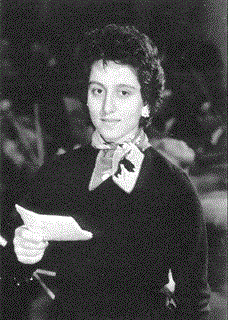
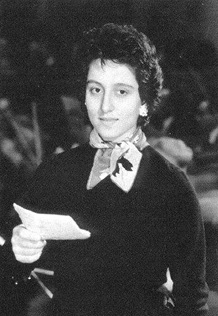
Frequently Asked Questions
Who is Fairuz?
Fairuz is a Lebanese singer widely regarded as one of the most celebrated vocalists in the Arab world. She is also regarded as a cultural symbol of modern Lebanon.
What nicknames is Fairuz known by?
She has been called 'The Bird of the East,' 'The Cedar of Lebanon,' 'The Moon's Neighbor,' 'The Voice of Lebanon,' and 'Our Ambassador to the Stars.' These titles reflect her status as a beloved national icon.
Why is Fairuz considered a symbol of modern Lebanon?
Her career as an iconic vocalist made her a unifying cultural figure for the country. Fans and commentators often point to her music as a defining sound of Lebanese identity.
What field is Fairuz associated with?
She is a singer whose work spans the broader Arab musical landscape. Her nationality is Lebanese, and her professional identity is that of a vocalist.
More in Performers And Entertainers 1-19
Spotted an error? Know more?
This is a living reference — every entry is fact-audited, and reader corrections feed straight into our audit queue. Suggest an edit · See this site's audit record