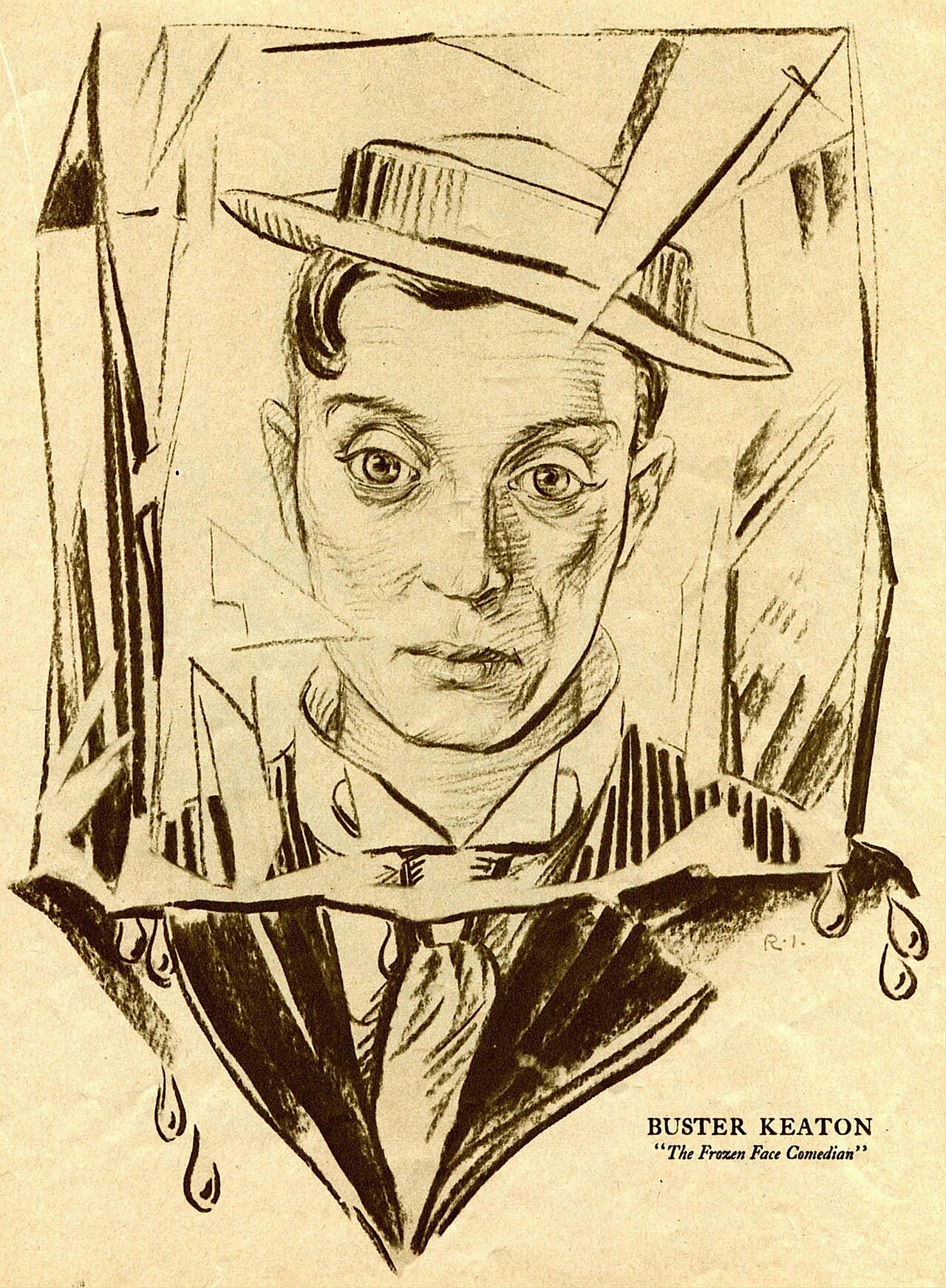
Buster Keaton
Silent film comedian and stunt performer who learned through trial and error.

Russell Iredell · Public domain
Some people act as both stunt performers and daredevils at various parts of their careers. Buster Keaton is one of the examples given in the source. He is also mentioned as one of the first accepted professional stuntmen, alongside clowns and comedians like Charlie Chaplin and the Keystone Cops. The reason for this was that the staple diet of early films was an almost continual roll call of pratfalls, high dives and comedy car wrecks – the basic ingredients of a circus clown's routine. But much like their circus-based predecessors, these actors/stuntmen were not specifically trained to perform stunts, but instead learned through trial and error.
- born
- October 4, 1895
- died
- February 1, 1966
- field
- Actor, comedian, filmmaker
- nationality
- American
- known_for
- Silent film physical comedy, deadpan expression, stunts
Lore & Background
Buster Keaton is listed in the source as an example of someone who acted as both a stunt performer and a daredevil at various parts of his career. The source notes that the first accepted professional stuntmen were clowns and comedians like Charlie Chaplin, Buster Keaton and the Keystone Cops. This was because early films relied on pratfalls, high dives and comedy car wrecks – the basic ingredients of a circus clown's routine. Like his circus-based predecessors, Keaton was not specifically trained to perform stunts, but instead learned through trial and error.
Reader's Guide
The source does not provide a detailed guide or career timeline for Buster Keaton beyond noting his role as both a stunt performer and daredevil, and his inclusion among the first accepted professional stuntmen who learned through trial and error. No specific films, dates, or biographical details beyond this are given in the source.
Did You Know?
- Buster Keaton is cited in the source as an example of someone who acted as both a stunt performer and a daredevil at various parts of their career.
- The source lists Keaton among the first accepted professional stuntmen, alongside Charlie Chaplin and the Keystone Cops.
- Keaton learned to perform stunts through trial and error, like the circus-based predecessors of early film stuntmen.
- The source notes that early films' staple diet of pratfalls, high dives and comedy car wrecks were the basic ingredients of a circus clown's routine, which Keaton performed.
The Dual Role — Stunt Performer and Daredevil
Buster Keaton occupies a distinctive position in the history of physical performance because he is specifically identified as someone who functioned in two separate capacities at different points in his career: as a stunt performer working within the context of filmed or televised productions, and as a daredevil presenting the act itself before a live audience. These are not interchangeable roles. A stunt performer appears inside a narrative medium, where the audience experiences danger through the frame of a story, and where editing can later strip away the visible safety rigging that made the act survivable. A daredevil, by contrast, offers the stunt as the entire spectacle with no fictional wrapper, and the crowd witnesses in real time whether the performer is genuinely executing what is on display. That Keaton moved between these two worlds—the record does not specify the order—suggests a performer comfortable enough with physical risk to translate it across fundamentally different audience relationships. He shares this particular dual classification with Harry Houdini, placing him among a small group of historical figures who straddled both the cinematic and the live-performance sides of dangerous physical craft.
The Physical Toll and Inherent Danger
The record is unambiguous on one point: the craft carries a built-in risk of injury or death that no amount of polish can eliminate, and physical strain is a constant companion to the work. Even when a stunt is choreographed to perfection and every safety mechanism functions as designed, the body still absorbs the consequences of the act. Unplanned injury is not an anomaly in this line of work; it is an expected possibility that accompanies the physically testing demands of the discipline. For a performer like Buster Keaton, who is documented as having worked as a stunt performer, this meant that the dangerous acts he executed on camera—whether they involved falls from height, collisions, drags, or the aftermath of explosions—were not merely theatrical gestures but genuinely punishing exercises. The maximum risk, according to the established understanding of the field, occurs when such acts are performed before a live audience, where there is no second take and no editorial safety net. Keaton's career, which included the daredevil dimension of performing for a crowd, placed him squarely in that highest-risk category at times, where the audience could see with their own eyes whether the performer was truly doing what appeared to be happening.
A Pre-Regulation Landscape of Stunt Craft
Buster Keaton's career unfolded in an era when the professional infrastructure surrounding stunt work looked nothing like the modern landscape. During the period spanning the early 1900s to the 1960s, the people executing stunts for the screen were generally individuals who had already honed their physical discipline well before they ever entered the film industry. There was no requirement to be a certified member of a professional stunt performers' organization, no mandatory insurance obtained through such certification, and no standardized curriculum combining martial arts, stage combat, and safety planning that today's performers must complete. The early motion picture industry, still in its infancy, often relied on willing applicants—sometimes veterans of the Spanish-American War with firearms training, sometimes former cowboys whose livelihoods had been displaced by the fencing-in of the open range—who would execute a dangerous shot for little or no pay. Keaton entered this world of self-directed physical mastery, where the craft was learned through personal training and discipline rather than institutional certification, and where the line between a skilled performer and a mere willing volunteer was drawn by individual talent and nerve rather than by organizational membership.
Choreography, Safety Mechanisms, and the Audience's Eye
A central tension in the world of stunt performance is the gap between what the audience perceives and what is mechanically true. Stunts are choreographed and often mechanically rigged so that they appear genuinely dangerous while carrying built-in safety mechanisms that protect the performer. In a filmed context, this is manageable: the editor can cut away the visible rigging, the padded landing, the hidden support structure, and what remains on screen is pure apparent peril. But when the same performer steps in front of a live crowd, the illusion becomes far harder to maintain. The audience sees the full apparatus, judges in real time whether the act is authentic, and the performer has no editorial second chance. For Buster Keaton, whose documented career spanned both the stunt-performer and daredevil roles, this distinction was not academic. In his filmed work, the safety choreography could be invisible to the viewer. In his live daredevil performances, the crowd's direct line of sight meant that the boundary between genuine risk and managed risk was visible, and the performer's credibility depended on the audience's willingness to believe what their eyes were telling them.
Gallery
Frequently Asked Questions
Who is Buster Keaton?
Buster Keaton was an American actor, comedian, and filmmaker who became one of the most iconic figures in early cinema. His full name was Joseph Frank Keaton, and he worked primarily during the silent film era.
What made Buster Keaton's comedy style unique?
Keaton combined elaborate physical stunts with a completely expressionless, deadpan face, creating a stark contrast between the chaos around him and his unchanging demeanor. This blend of daring action and stoic delivery became his signature look.
What does the nickname 'The Great Stone Face' refer to?
It describes Keaton's trademark blank, unchanging facial expression that he maintained even while performing incredible physical gags and stunts. Audiences found the contrast between his stillness and the mayhem around him both hilarious and mesmerizing.
What era of filmmaking is Buster Keaton most associated with?
He is most closely linked to the silent film period of the 1920s, during which he wrote, directed, starred in, and performed stunts for his own comedies. His work from that decade remains a cornerstone of early Hollywood history.
When was Buster Keaton born and when did he pass away?
He was born on October 4, 1895, and died on February 1, 1966. His life spanned the rise of silent cinema through its eventual decline.
More in Performers And Entertainers 1-19
Spotted an error? Know more?
This is a living reference — every entry is fact-audited, and reader corrections feed straight into our audit queue. Suggest an edit · See this site's audit record